Language Overview
30+ Million SpeakersKurdish (کوردی, Kurdî) is an Indo-European language spoken by the Kurdish people in the geographical region of Kurdistan and elsewhere. It belongs to the Iranian branch of the Indo-Iranian language family.
Kurdish is written using several different writing systems depending on the region and political circumstances. The Kurdish language has several dialects, with Kurmanji (Northern Kurdish) and Sorani (Central Kurdish) being the most widely spoken.
Language Quick Facts
Speakers
Main Dialects
Writing Systems
Kurdish developed from the northwestern branch of the Iranian languages, which are part of the Indo-European language family. Its earliest forms are traced back to ancient Iranian languages.
Kurdish literary tradition began to flourish with poets like Ali Hariri (1009-1079) and later with the famous poet Ahmad Khani (1650-1707), who wrote the epic "Mem û Zîn".
In the early 20th century, Kurdish language standardization efforts began, with separate writing systems developing for different dialects across various regions.
Today, Kurdish is recognized as an official language in Iraq and has varying degrees of recognition in other countries. Media, education, and literature in Kurdish continue to develop despite historical challenges.
Kurdish Dialects
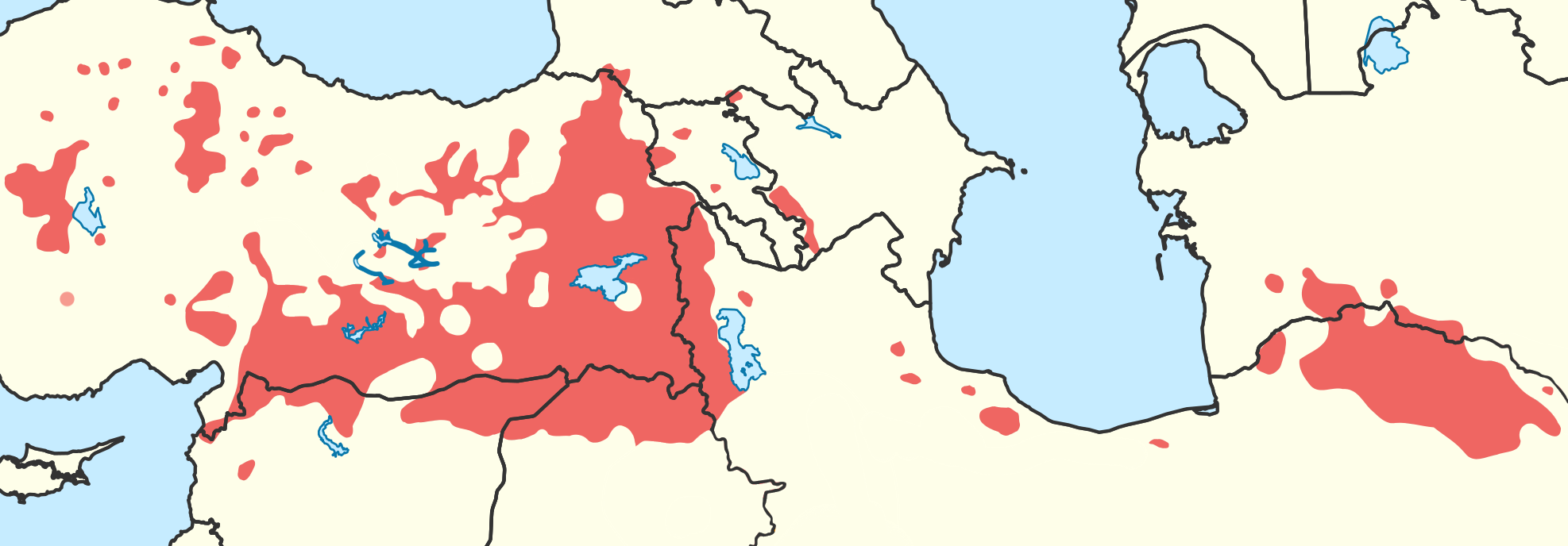
Kurmanji
Northern KurdishKurmanji is the most widely spoken Kurdish dialect, used primarily in Turkey, Syria, and parts of Iraqi and Iranian Kurdistan. It is written using the Latin alphabet and has a rich literary tradition.
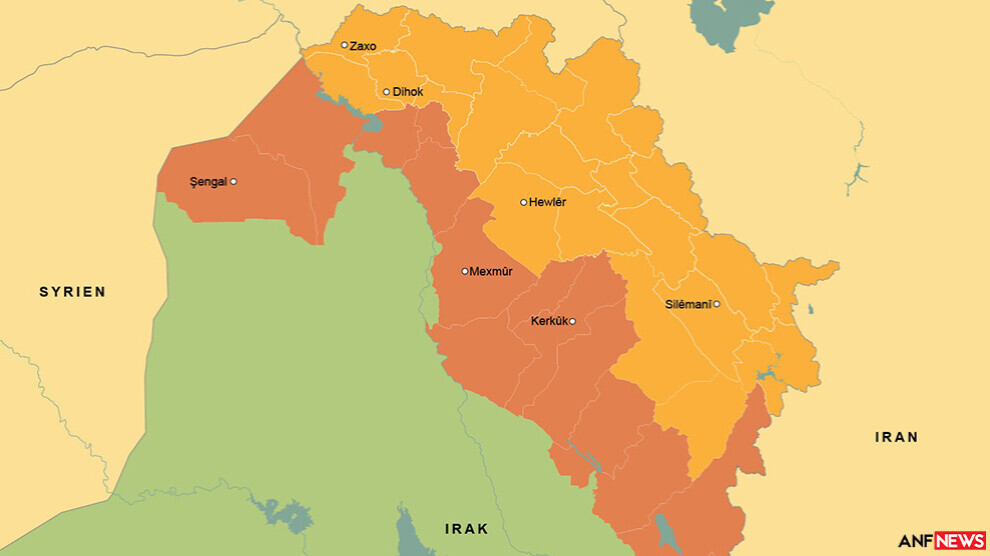
Sorani
Central KurdishSorani is spoken primarily in Iraqi Kurdistan and parts of Iranian Kurdistan. It is written using a modified Arabic script and has a significant body of literature and media.
Southern Kurdish
PehlewaniSouthern Kurdish is spoken in parts of Iran and Iraq. It includes several subdialects like Feyli, Kelhuri, and Laki and has preserved some archaic features of Iranian languages.
Gorani and Zazaki
Northwestern KurdishGorani and Zazaki are sometimes classified as Kurdish dialects, though linguistically they are distinct from other Kurdish varieties. They are spoken by smaller communities in parts of Iraq, Iran, and Turkey.
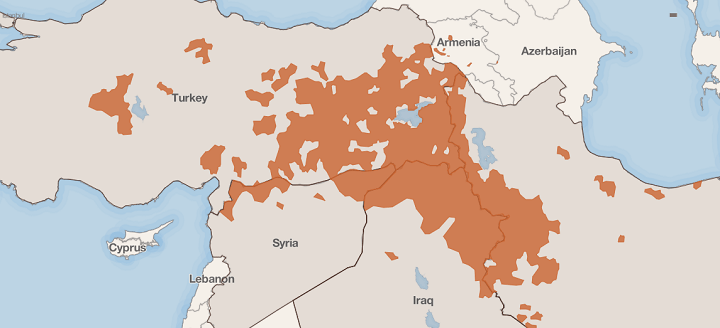
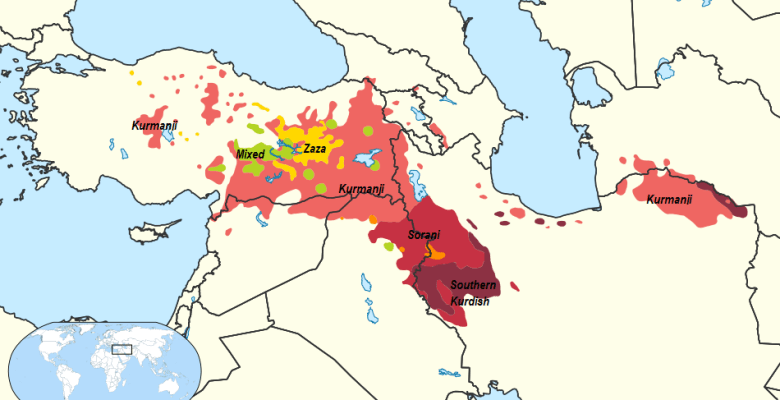
Kurdish Language Distribution
This map shows the Kurdistan region where Kurdish languages and dialects are primarily spoken. The language distribution varies across Turkey, Syria, Iraq, and Iran.
Kurdish Alphabet
The Kurdish Latin alphabet consists of 31 letters used primarily for the Kurmanji dialect.
A a
as in 'father'
B b
as in 'boy'
C c
as in 'jar'
Ç ç
as in 'church'
D d
as in 'dog'
E e
as in 'let'
Ê ê
as in 'they'
F f
as in 'fish'
G g
as in 'go'
H h
as in 'hat'
I i
as in 'hit'
Î î
as in 'feet'
The Sorani Kurdish is written using a modified Arabic script with 33 letters.
ا
Alif
ب
Be
پ
Pe
ت
Te
ج
Cim
چ
Çe
ح
He
خ
Xe
د
Dal
ر
Re
ز
Ze
ژ
Je
Famous Kurdish Literature
Mem û Zîn
1692Written by Ahmad Khani, this epic love story is considered the national epic of Kurdish literature and serves as an allegory for the Kurdish nation.
Works of Goran
Abdulla Goran (1904-1962)Abdulla Goran is considered the founder of modern Kurdish poetry. He broke away from the classical style and introduced free verse to Kurdish literature.
Dîwana Melayê Cizîrî
17th CenturyMelayê Cizîrî was a prominent Kurdish poet and Sufi whose collection of mystical poems continues to influence Kurdish literary and philosophical thought.
Modern Kurdish Novel
20th CenturyKurdish novelists like Ibrahim Ahmad, Hejar, and Sherko Bekas have contributed to the development of modern Kurdish literature addressing themes of identity, struggle, and cultural preservation.
Folk Tales and Oral Traditions
TraditionalKurdish folklore and oral traditions have preserved stories, legends, and cultural knowledge through generations, forming an important part of Kurdish literary heritage.
Contemporary Kurdish Poetry
Present DayContemporary Kurdish poets continue to enrich the tradition with works that address modern challenges while preserving cultural themes and linguistic innovations.